Brand voice
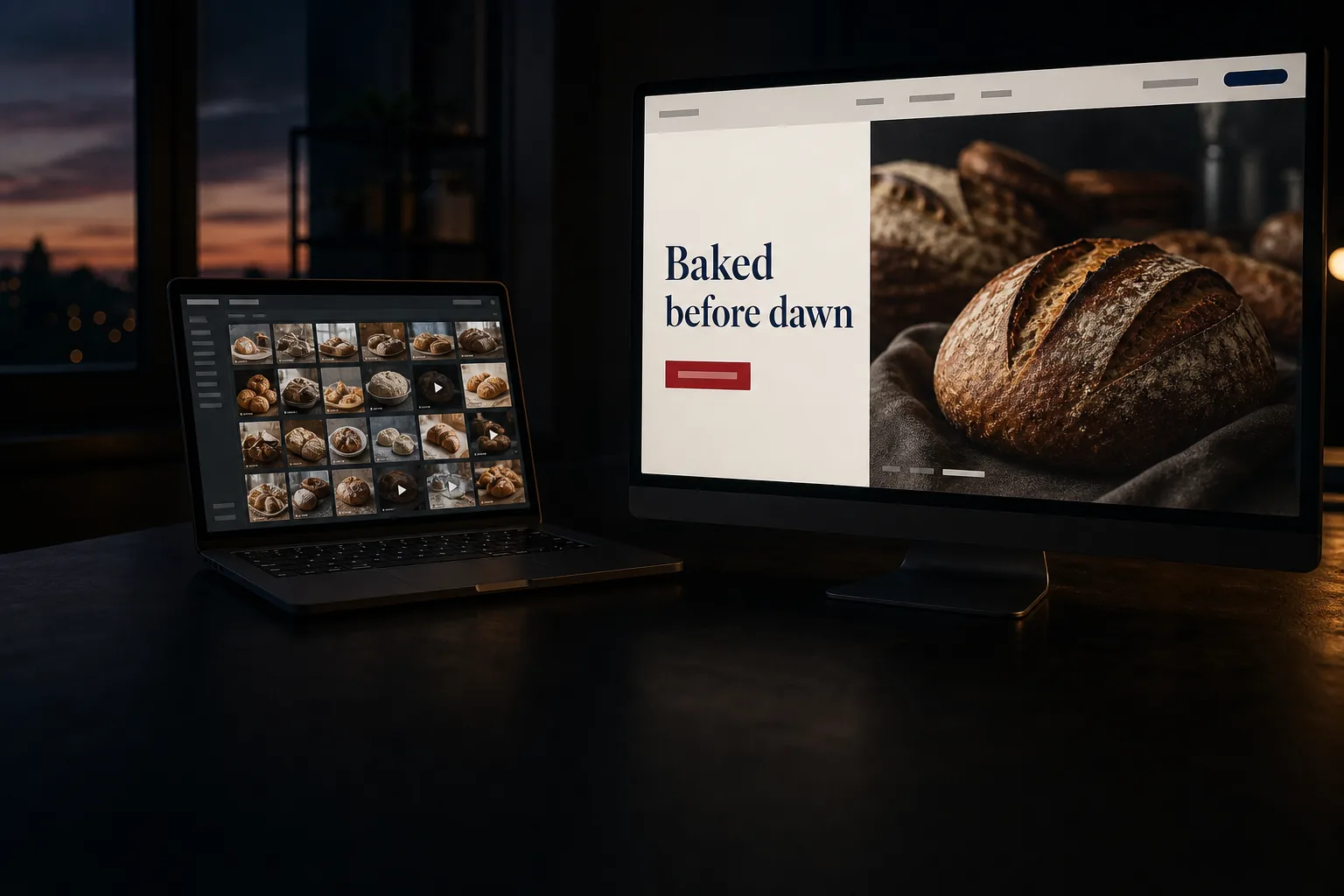
One consistent way of speaking, defined once and applied across every page rather than reinvented per section.
Design & Build
Phone photos, half-written pages, an old brochure and a folder of PDFs — we turn what you already have into the copy and visuals a website is actually made of.
Real client, real transformation
Empress Painting came to us with an outdated site and material collected over years of actual work. Nothing below is a mock-up.
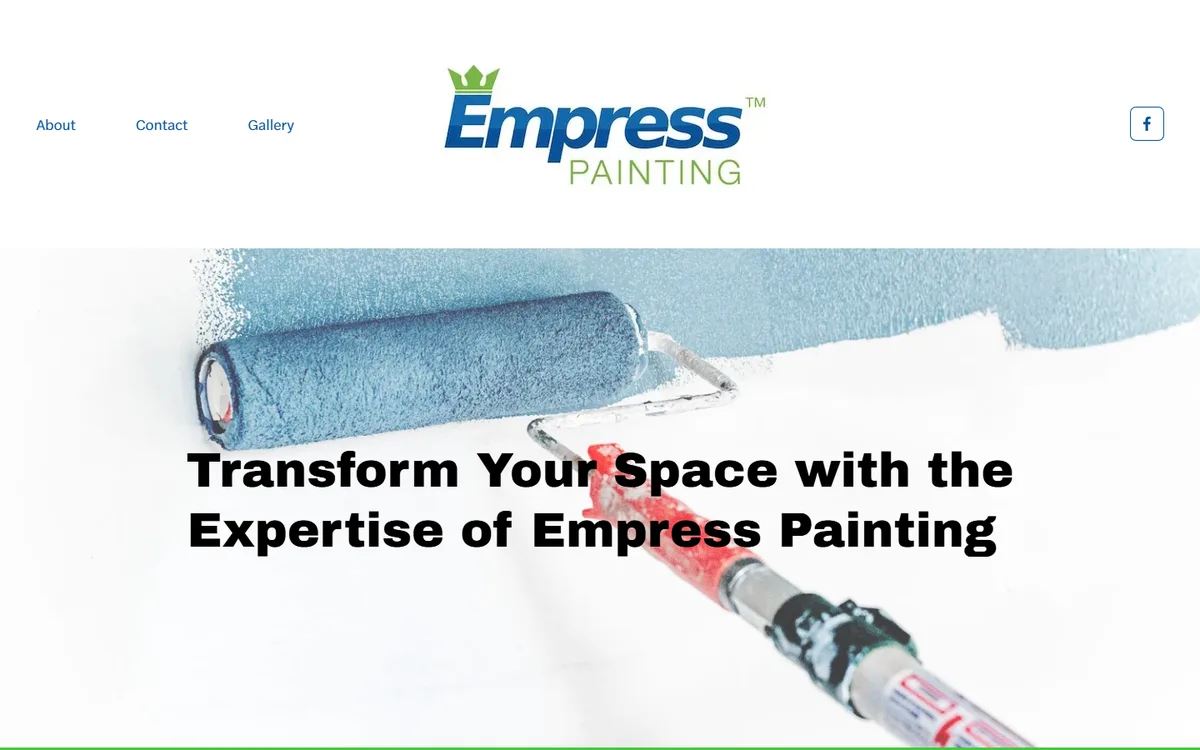
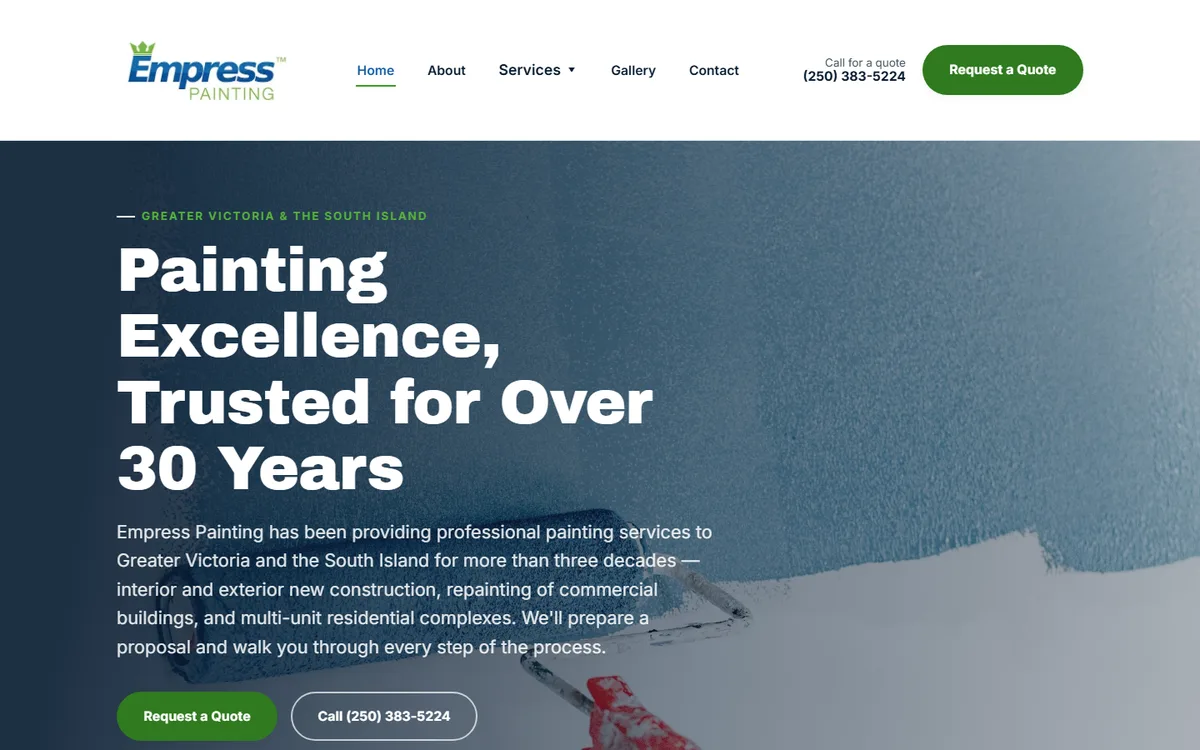
The raw material did not change — the business was always this good. What changed is the writing, the art direction, and the structure carrying it.
One line, every format
The same approved line, typeset live by your browser as a website hero, a service card and a social tile. Write it once, properly — then it works everywhere.
This is the quiet economics of doing copy properly: one round of real writing feeds the website, the service pages and a month of social — instead of three vendors producing three unrelated voices. The sample line belongs to a fictional plumber, but the discipline is exactly what you are buying.
Image art direction, live
The same product photo, cropped, composed and treated by your browser for three different jobs — the way every image on your site should be handled.
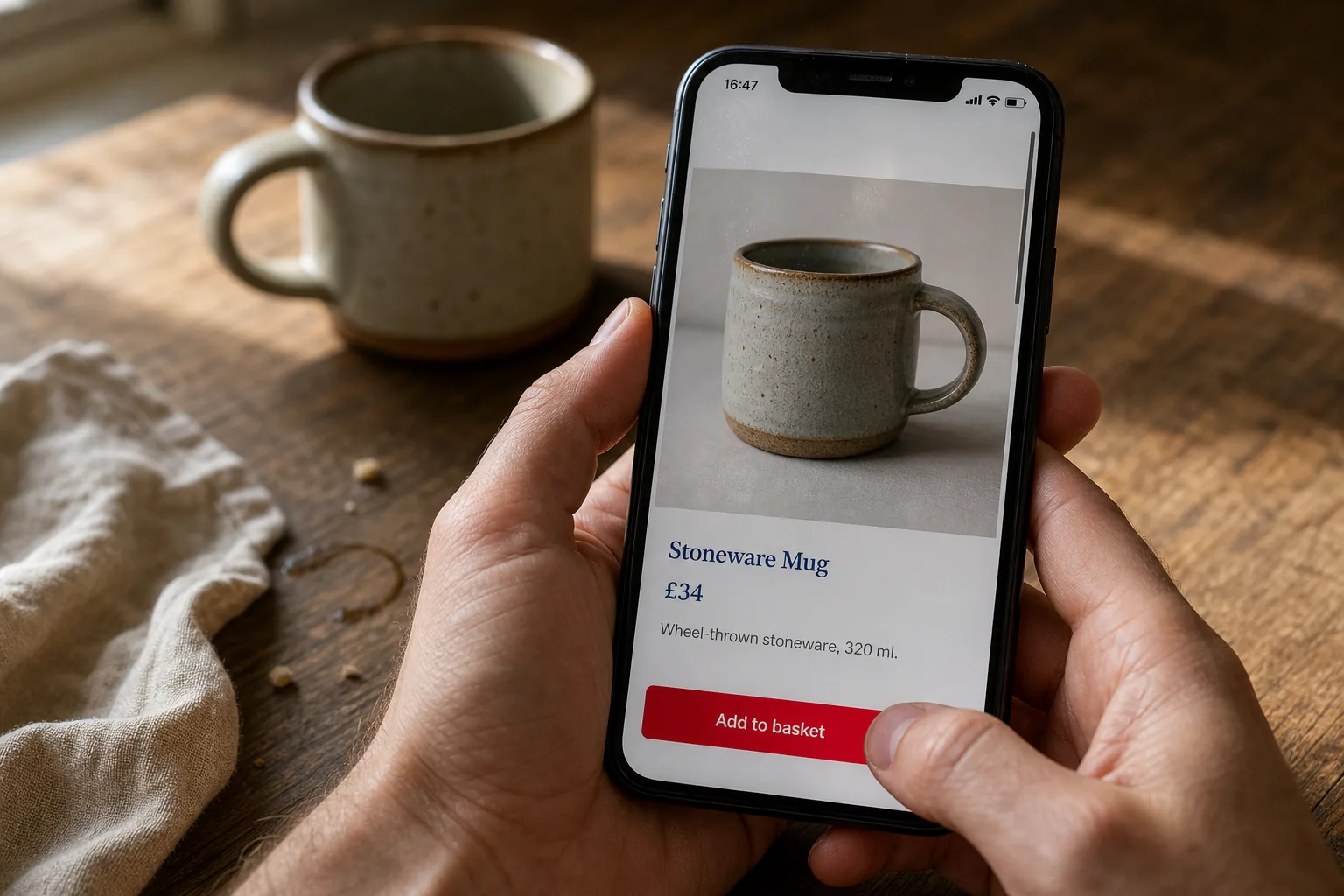
None of these are three photographs — they are one asset, directed three ways. That is the discipline you are buying: every image arrives with its crops, its treatment and its responsive behaviour already decided.
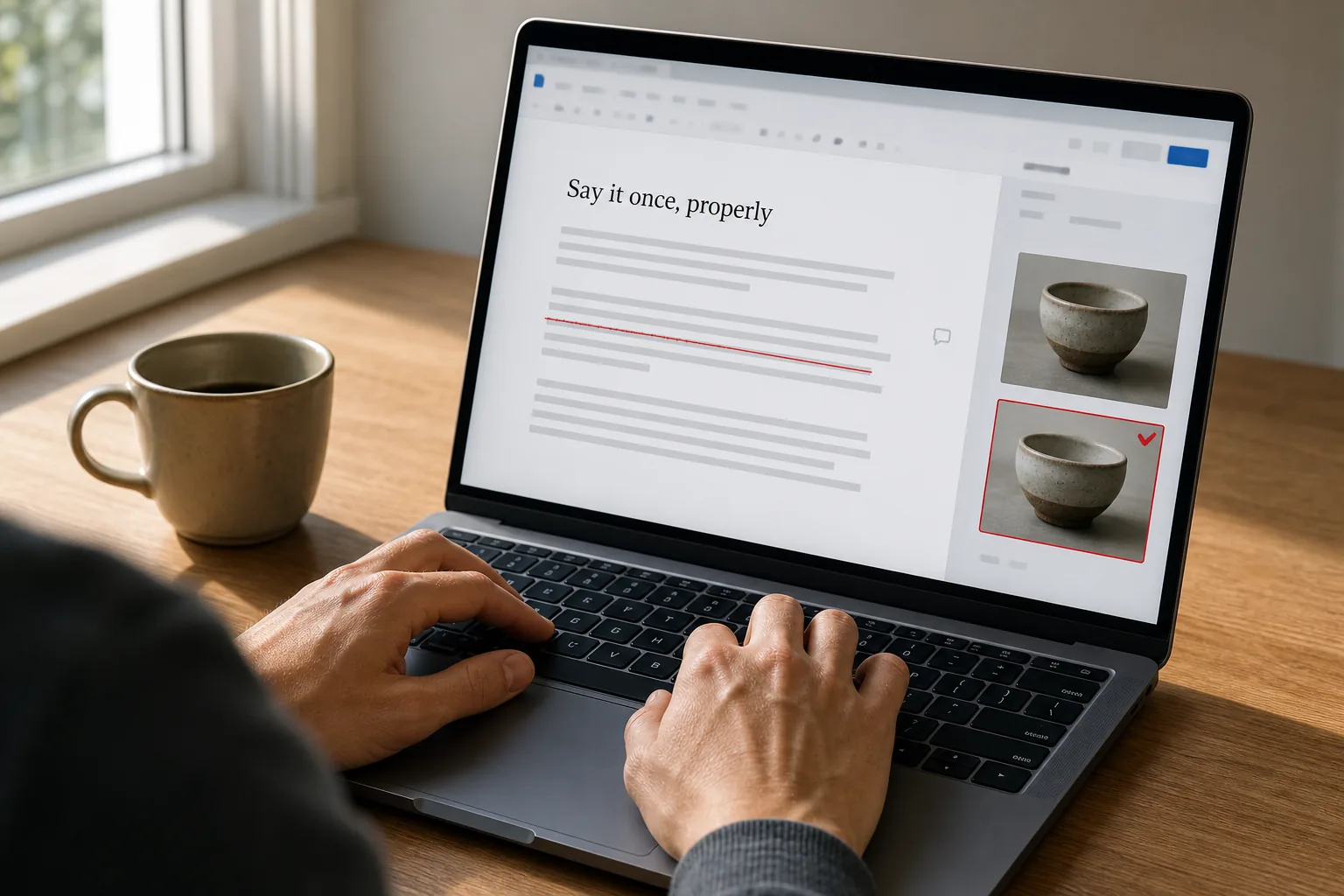
Words are design material
A headline that needs two lines changes the design. A photo with the subject on the right decides where the text goes. We write and art-direct together, so the page is argued as one piece instead of assembled from parts that never met.
It is also why we cut. The strikethrough is most of the work — what survives is the sentence that earns its screen space.
What we produce
One consistent way of speaking, defined once and applied across every page rather than reinvented per section.
Headlines, body and calls to action written for the buyer and the decision, at the length the page actually needs.
A shot list built around your real work, then selection and grading so everything sits in one world.
The usable material you already have — phone photos included — cropped, corrected and graded to web standard.
Custom illustrations and explanatory graphics with real labels, drawn to the brand rather than pulled from a library.
The same material recut for the formats your channels need, so nothing is designed twice.
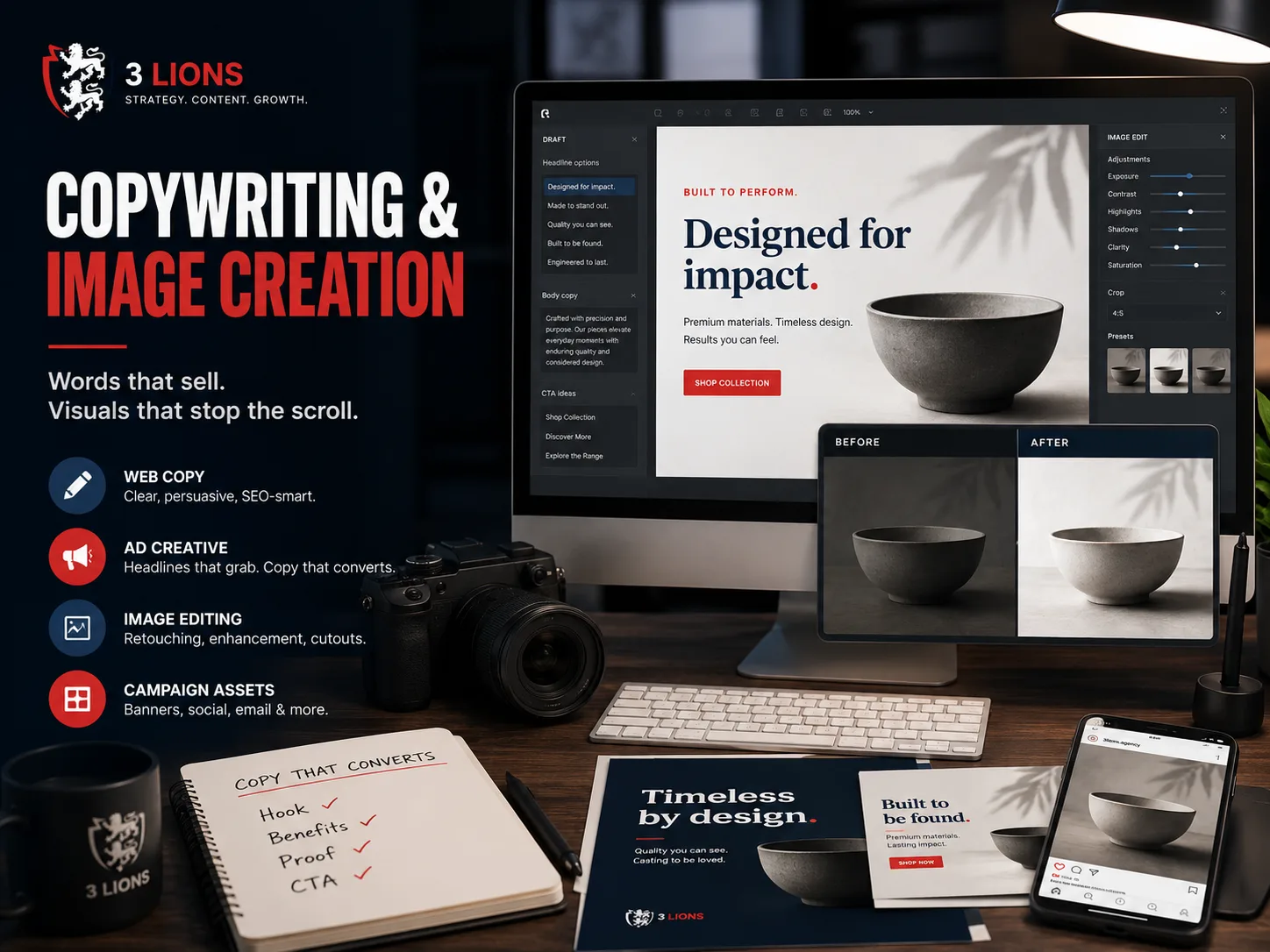
Stock photos are someone else’s business.
Stock photography tells your buyer one thing: this business could not show me itself. If a real photo of your work, your premises or your product exists, it beats anything we could invent — and our job is to make it look like it belongs on a serious website.
The knowledge base
Content is where most website projects quietly stall. These are the questions that unstick them.
We write it. The process starts with an interview — you talk about the business the way you would across a counter, and we take the transcript, the facts and the voice and turn them into pages. You review for accuracy and tone; we handle structure, hierarchy and the search side. Owners who dread “homework” relax at this point: your job is to know your business and correct us where we are wrong, not to produce drafts.
More common than you would think, and entirely workable. The interview produces the raw copy. For images, we plan a simple shot list around what actually exists — your premises, your work, your product — and either art-direct a shoot or coach you through capturing it on a decent phone camera, which for many trades is genuinely enough once the shots are planned, selected and graded properly. The site launches honest and improves as material accumulates; what it never does is launch on stock photos of strangers shaking hands.
Yes — auditing what exists is step one. Old brochures, PDFs, half-written About pages and ten years of phone photos usually contain more usable material than their owners believe. Copy gets mined for facts and voice, then rewritten to structure; photos get culled hard, then the survivors are cropped, corrected and graded so they sit in one visual world. The result keeps what was true about the old material and discards what was tired about it.
We work from what you already sound like: the interview recording, your emails, reviews customers have left, the way you explain your work when nobody is marketing. From that we pull the patterns worth keeping — plain-spoken, technical, warm, dry — and write to them consistently. The test we use: would your best customer read a page and say “that sounds like them”? If a line sounds like an agency wrote it, it gets cut, which is also our policy for this website.
Because your buyer has seen every stock photo before, and some part of them registers what it means: this business could not show me itself. Stock is anonymous by design — the same smiling team appears on a dentist’s site in Ohio and a logistics firm in Leeds. Your premises, your product, your actual work — even imperfect — carry proof that no library image can. Where a real photo genuinely cannot exist yet, we art-direct something deliberate rather than reaching for the library, and we never pad pages with filler imagery to make them look furnished.
Usually, yes — within honest limits. Modern phone cameras capture plenty; what makes phone photos look amateur is everything around the capture: random framing, mixed lighting, clutter in the background, no consistency between shots. We fix what is fixable in the edit — crop, straighten, colour-correct, grade to one palette — and coach the reshoots that need five minutes of care rather than new equipment. What we will tell you honestly: some subjects (food close-ups, reflective products, large interiors) reward a proper shoot, and we will say so before you spend either way.
Sparingly, deliberately, and never as a substitute for showing your actual business. Where an illustrative visual genuinely serves a page — a cinematic background, a concept that cannot be photographed — we may generate a foundation and then art-direct it to brand standard, with any meaningful words added as real text rather than left to a model to mangle. What we do not do is fill service pages with generic AI imagery and call it content; half the internet is doing that right now, and buyers are already learning to smell it.
Deciding, for every image: what it must communicate, how it is cropped for each place it appears, where the subject sits so text has room, how it is graded so it belongs with its neighbours, and how large it loads on a phone. The triptych above this FAQ is the discipline made visible — one photograph, three deliberate treatments. Sites without art direction are easy to spot: every image a different temperature, subjects fighting headlines for space, five-megabyte photos loading like syrup. Sites with it just feel expensive, and nobody can quite say why.
Written pages (headlines, body, calls to action) placed in the design rather than handed over as documents; a defined brand voice you can keep writing in; the image library — originals plus web-ready crops and treatments; and the graphics a page genuinely needs, drawn to brand with real labels. Everything is yours: source files included, licences in your name, nothing held back. If a page later needs a new section, the voice document and image system mean it can be added without the whole thing drifting.
That is half the point of doing it properly. One round of real writing and one set of directed images becomes the website, the Google Business profile, the proposal boilerplate, and a month of social posts — the same message recut per format, which is cheaper and more consistent than three vendors inventing three voices. We deliver the social crops alongside the web crops when that reuse is part of the plan, and the one-line/every-format band above shows exactly how a single approved message travels.
When there is a real reason, yes. Ongoing content earns its cost when it answers questions buyers actually search — the kind of pieces that keep bringing the right visitors for years. What we will not sell you is a monthly quota of filler posts nobody reads; that era of SEO is over, and answer engines are even less impressed by it than humans were. A smaller number of genuinely useful pieces, kept current, beats a graveyard of thin ones.
More directly than most ranking advice admits. Search engines and answer engines are both trying to serve the page that best answers the query — clear structure, explicit topics, questions answered in full sentences, facts stated consistently. Copy written for a real buyer, organised under meaningful headings, is almost exactly what the machines want too. What no longer works is writing for the algorithm: keyword stuffing reads badly to people and is actively discounted by machines. We write for the buyer and structure for the crawler — the order matters.
With a system rather than heroics: a voice definition (how sentences run, what words we never use), a type and image treatment that every asset passes through, and one writer-editor pair across the whole site so page eleven sounds like page one. Consistency is most of what reads as “premium” — a site where every page has the same temperature feels like an institution; a site assembled from different moods feels like a group project.
Typically it runs alongside the design rather than after it — interviews early, drafts reviewed while layouts are still flexible, final polish as pages are built. For a standard business site the writing and image work adds days, not months, to the schedule, provided reviews come back promptly. Content is only ever the bottleneck when it is left until last, which is exactly how most agencies handle it and exactly why their projects stall at “waiting on content”. Ours do not, because content is not an afterthought here — it is half the service.
Send us what you have — we’ll tell you honestly what it can become.